Table of Contents
Introduction: Bridging Ancient Wisdom with Modern Science
Ayurveda, India’s traditional system of medicine, has been practiced for over 5,000 years. Rooted in the principles of balancing mind, body, and spirit, it emphasizes natural remedies, diet, and lifestyle modifications. While millions of people trust Ayurveda, skeptics often question: Where is the scientific evidence?
In recent decades, modern medical research has increasingly turned its attention toward Ayurvedic herbs, therapies, and treatment protocols. Numerous clinical trials, laboratory studies, and published research papers are now validating what ancient texts like Charaka Samhita and Sushruta Samhita taught centuries ago.
In this article, we explore scientific evidence behind Ayurvedic treatments and how modern medicine is beginning to acknowledge their role in treating chronic diseases and improving overall health.
Ayurveda and Modern Medicine: Why the Debate Exists
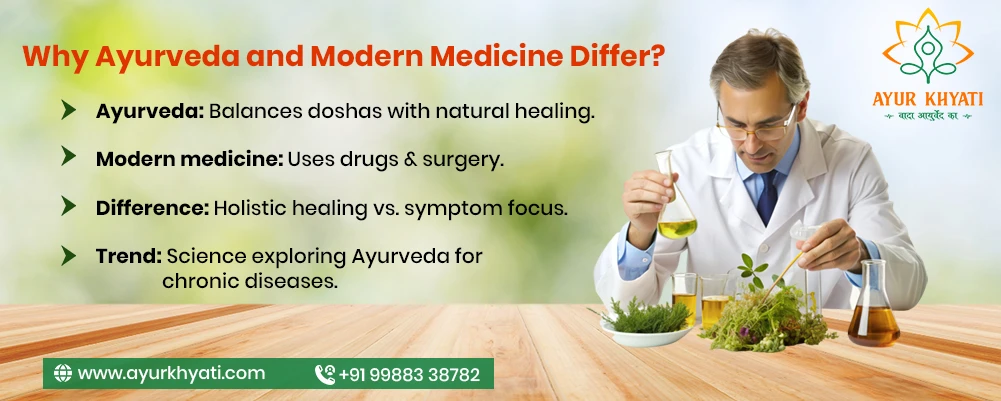
- Ayurveda’s foundation: Balancing doshas (Vata, Pitta, Kapha) through herbs, diet, and lifestyle.
- Modern medicine’s approach: Targeted treatment using drugs and surgical methods.
- The gap: Ayurveda emphasizes holistic healing, while modern medicine often focuses on symptom management.
- The shift: With rising chronic diseases like diabetes, arthritis, and stress disorders, modern science is exploring Ayurveda for complementary therapies.
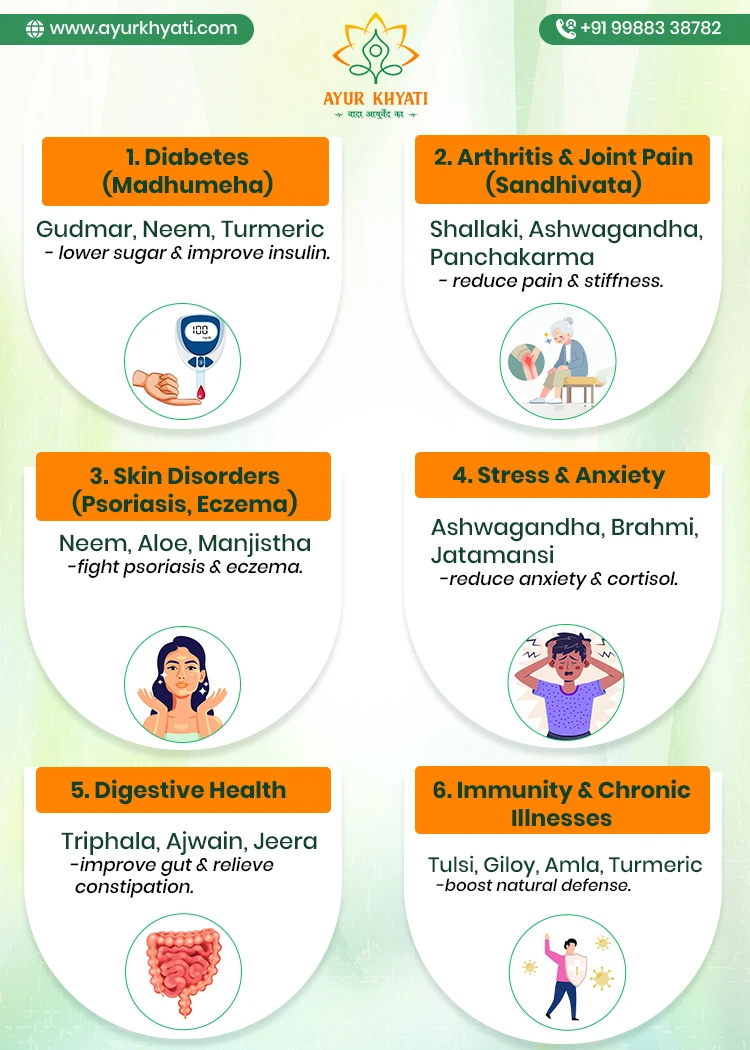
1. Ayurvedic Research on Diabetes Management
Ayurvedic perspective: Diabetes (Madhumeha) is seen as a result of imbalance in Kapha and Vata doshas, leading to improper metabolism. Herbs like Gudmar (Gymnema sylvestre), Neem, and Turmeric are recommended.
Scientific validation:
- A study published in Journal of Ethnopharmacology (2017) found that Gymnema sylvestre reduces intestinal absorption of glucose and increases insulin secretion.
- Curcumin (from turmeric) has been proven to improve insulin sensitivity and reduce inflammation in diabetic patients.
- A randomized clinical trial in India (2019) confirmed that Ayurvedic formulations significantly reduced fasting blood sugar and HbA1c levels.
Modern takeaway: Ayurveda offers plant-based solutions that support glucose control naturally, with fewer side effects than chemical drugs.
2. Ayurvedic Solutions for Arthritis and Joint Pain
Ayurvedic perspective: Arthritis is classified as Sandhivata (degeneration due to Vata imbalance). Therapies like Panchakarma and herbs like Shallaki (Boswellia serrata) and Ashwagandha are prescribed.
Scientific validation:
- Boswellia serrata extract has shown anti-inflammatory effects comparable to NSAIDs, according to Arthritis Research & Therapy (2018).
- Ashwagandha was found to reduce pain and stiffness in osteoarthritis patients in a 2015 randomized double-blind clinical trial.
- Panchakarma therapies, including medicated oil massage (Abhyanga), demonstrated improvements in mobility and reduction in pain in multiple clinical studies.
Modern takeaway: Ayurvedic herbs provide effective anti-inflammatory benefits, often without the gastric side effects of conventional painkillers.
3. Skin Disorders: Psoriasis & Eczema
Ayurvedic perspective: Skin diseases (Kustha) arise from Pitta and Kapha imbalance. Therapies include detoxification, blood purification, and topical herbal oils like Neem, Aloe vera, and Manjistha.
Scientific validation:
- Neem (Azadirachta indica) contains nimbidin, a compound proven to have antimicrobial and anti-inflammatory properties.
- Clinical trials published in the Indian Journal of Dermatology showed Ayurvedic formulations reducing scaling, redness, and itching in psoriasis patients.
- Aloe vera gel has been shown to improve skin hydration and reduce inflammation in eczema cases.
Modern takeaway: Ayurveda’s plant-based remedies are now accepted as adjunct therapies in dermatology, especially for chronic skin disorders.
4. Stress, Anxiety, and Depression
Ayurvedic perspective: Imbalance in Vata dosha leads to nervous system instability, causing stress and anxiety. Herbs like Brahmi, Ashwagandha, and Jatamansi are recommended.
Scientific validation:
- Ashwagandha extract has been clinically proven to lower cortisol levels (stress hormone) by up to 30%, according to a 2012 study in Indian Journal of Psychological Medicine.
- Brahmi (Bacopa monnieri) improves memory and reduces anxiety in both adults and children.
- Modern psychiatry now recognizes adaptogens (like Ashwagandha) as natural stress relievers.
Modern takeaway: Ayurveda is emerging as a safe, non-addictive alternative to anti-anxiety drugs.
5. Digestive Disorders and Gut Health
Ayurvedic perspective: Digestion (Agni) is central to health. Weak digestive fire leads to Ama (toxins) causing acidity, IBS, constipation, and more. Herbs like Triphala, Jeera, and Ajwain are commonly used.
Scientific validation:
- Triphala has been shown to improve gut microbiota and reduce constipation in a randomized clinical trial (Journal of Alternative & Complementary Medicine, 2017).
- Ajwain contains thymol, which aids in reducing bloating and indigestion.
- Studies confirm that Ayurvedic dietary rules (like eating according to Prakriti) align with modern nutritional science.
Modern takeaway: Ayurveda’s holistic approach to gut health complements modern gastroenterology.
6. Ayurveda for Immunity & Chronic Illnesses
Ayurvedic perspective: Herbs like Tulsi, Giloy, Amla, and Turmeric are powerful Rasayanas (rejuvenators) that enhance immunity.
Scientific validation:
- Giloy (Tinospora cordifolia) was found to improve immune response against viral infections in multiple clinical trials.
- Amla is scientifically proven to be one of the richest sources of Vitamin C, strengthening immunity.
- During COVID-19, the Indian government’s Ministry of AYUSH promoted Ayurvedic immunity boosters, which were later studied for effectiveness in reducing infection severity.
Modern takeaway: Ayurveda provides evidence-based natural immunity boosters recognized even in public health programs.
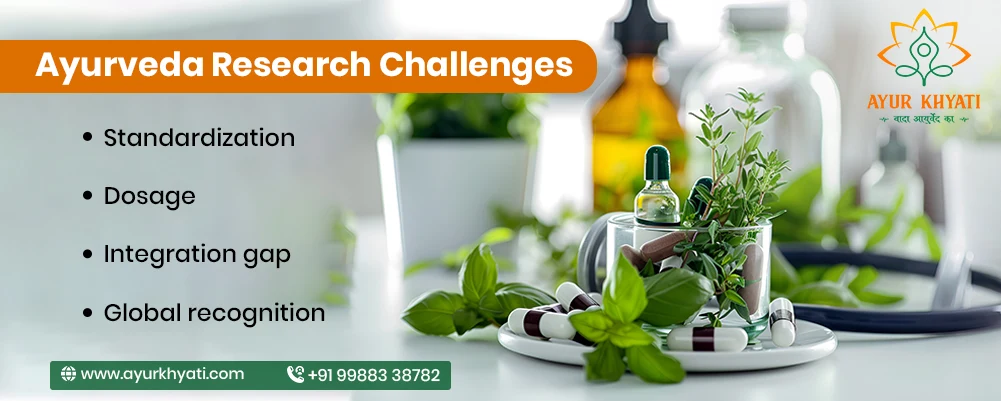
Challenges in Researching Ayurveda
- Standardization: Variability in herbal formulations complicates clinical trials.
- Dosage: Ancient texts describe qualitative measures, which differ from modern fixed doses.
- Integration gap: Lack of collaboration between Ayurveda and modern medicine researchers.
- Global recognition: Western countries demand more randomized controlled trials (RCTs) for acceptance.
Future of Ayurveda and Modern Medicine
- Growing integrative healthcare systems in India (AIIMS, AYUSH initiatives).
- Ayurveda gaining recognition in global medical research journals.
- AI and biotechnology being used to analyze Ayurvedic formulations scientifically.
- Increased collaborations between Ayurvedic hospitals and modern research centers.
Conclusion: Ancient Knowledge, Modern Proof
Ayurveda is no longer just “traditional wisdom.” Modern science is increasingly validating its therapies for diabetes, arthritis, skin disorders, stress, and immunity. While more clinical trials and standardizations are needed, the growing body of evidence suggests Ayurveda can work hand-in-hand with modern medicine for holistic healthcare.
At Ayur Khyati (Mahemdavad, Gujarat), we combine traditional Ayurvedic wisdom with modern clinical practices to deliver safe, effective, and personalized care. Whether you’re seeking treatment for chronic illness or looking to improve overall wellness, our Ayurvedic hospital offers scientifically backed healing solutions.
FAQs
Is Ayurveda scientifically proven?
Can Ayurveda replace modern medicine?
Which Ayurvedic herbs have scientific backing?
Are Ayurvedic treatments safe?
Where can I get scientifically backed Ayurvedic treatment in Gujarat?